
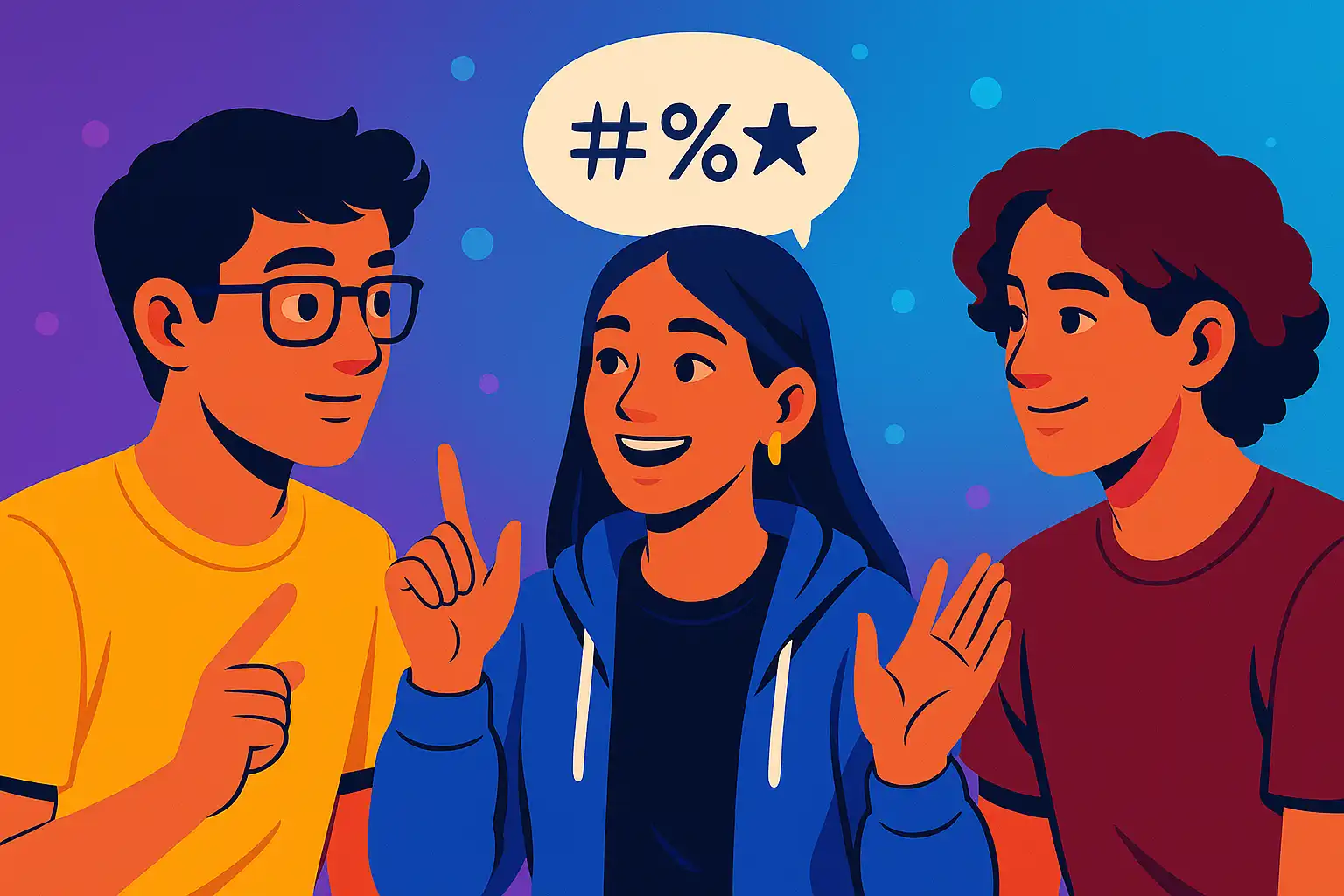
Your Gen Z coworker just called someone’s behavior “iconic” with a completely straight face, and you can’t tell if they’re praising or mocking. Someone described your teenager as “unhinged” and you’re not sure whether to be concerned or pleased. A comment on social media says “bestie, no” and you’re trying to figure out if that’s friendly or hostile. Welcome to one of the trickiest aspects of Gen Z communication: the same words can mean completely opposite things depending on context, tone, and relationship.
Gen Z has mastered the art of layered communication where literal meaning is often just the starting point. They use irony, sarcasm, and contextual cues in ways that can leave other generations completely baffled. A term that’s a genuine compliment from a close friend might be a cutting insult from an acquaintance. Words that sound negative can be high praise. Phrases that seem positive might drip with sarcasm.
Understanding Gen Z slang isn’t just about memorizing definitions—it’s about learning to read social cues, recognize irony, and grasp the nuanced ways this generation communicates approval and disapproval. The difference between compliment and insult often lies not in the words themselves but in delivery, relationship, and situation.
The Safe Zone: Unambiguous Compliments
Some Gen Z terms are reliably positive, offering safe ground where you don’t need to decode layers of meaning.
Fire remains one of Gen Z’s most straightforward compliments. When something is fire, it’s excellent, impressive, worthy of praise—no hidden meanings, no sarcastic undertones. “That presentation was fire” means the presentation was genuinely good. The term carries no negative interpretations, making it valuable in cross-generational communication.
Valid serves as Gen Z’s way of affirming that someone’s perspective, feelings, or choices are legitimate and reasonable. “Your feelings about this are totally valid” provides emotional validation. The term creates space for multiple perspectives—something can be valid even if you’d choose differently yourself. What makes “valid” reliably positive is its function as pure affirmation, consistently communicating respect and understanding.
Understood the assignment has become one of Gen Z’s highest compliments, indicating someone didn’t just complete a task but grasped exactly what was needed and delivered it perfectly. “She understood the assignment with that outfit” praises both execution and insight. The phrase recognizes grasping not just explicit requirements but implicit expectations and subtle nuances.
The Danger Zone: Consistently Negative Terms
Other Gen Z terms are reliably negative, where the meaning is straightforward criticism.
Mid has become Gen Z’s devastating dismissal for anything mediocre or disappointing. When something is mid, it failed to meet expectations—not dramatically, just disappointingly average. The term never flips positive. The sting of mid comes from its implication of unmet expectations—it’s worse than calling something outright bad because mid implies mediocrity, which Gen Z considers perhaps the worst quality something can have.
Cheugy serves as Gen Z’s word for things that are outdated or trying too hard to be trendy. When something is cheugy, it’s behind the times in ways that signal missing that trends have moved on. The term is always unflattering, always suggests being out of touch.
Pick me behavior describes someone trying too hard to seem different or special, often by putting down others of their own gender to appeal to the opposite sex. The term never flips positive—there’s no context where being called a “pick me” is anything but criticism for desperate, inauthentic behavior.
Cringe indicates something is so embarrassing or awkward that it causes secondhand discomfort. “That TikTok was pure cringe” means it was hard to watch. The term consistently functions as criticism and never carries positive connotations.
The Minefield: Context-Dependent Terms
Then there’s the tricky territory—words that can swing positive or negative depending on tone, relationship, and situation.
Sus demonstrates the complexity perfectly. Between close friends, “that’s sus” might be playful teasing about perfectly innocent behavior—your friend wore a fancy outfit and you jokingly suggest they have a secret date. But “he’s acting sus” said seriously indicates genuine suspicion. The identical word shifts from friendly banter to real concern entirely based on tone.
The difference comes down to whether suspicion is real or performed. Playful sus-calling happens between people with established trust where the accusation is obviously false. Genuine sus-calling suggests actual doubts about someone’s motives.
Unhinged perfectly captures Gen Z’s love of linguistic complexity. When someone admiringly says “she’s unhinged and I love it,” they’re praising bold, uninhibited behavior—someone who brings chaos energy in entertaining ways. But “his behavior was unhinged” said with concern criticizes erratic or genuinely concerning behavior. Same word, opposite meanings.
The key difference is whether the speaker loves or fears the lack of restraint. Positive unhinged celebrates someone being unapologetically themselves. Negative unhinged suggests someone has lost appropriate behavioral boundaries.
Iconic started as straightforward praise but has developed ironic usage. When someone genuinely admires an outfit and calls it “iconic,” that’s sincere compliment. But “iconic behavior” said with an eye-roll about someone’s embarrassing actions uses the term sarcastically—their behavior was memorably bad, iconic in its awfulness rather than excellence.
Bestie creates confusion because it shifts meaning based entirely on relationship. “Love you bestie” between actual friends is genuine affection. But “bestie, that’s not how this works” addressed to a stranger on social media is ironic—the false intimacy makes the correction feel simultaneously friendly and cutting. You’re calling them bestie precisely because they’re not your bestie.
Ironic bestie has become particularly common in online disagreements where someone wants to correct while maintaining a veneer of friendliness. The false intimacy emphasizes the distance between strangers while softening criticism.
Reading the Room: The Skills You Actually Need
Understanding Gen Z’s context-dependent language requires developing specific reading skills beyond vocabulary knowledge.
Listen for tone markers. Genuine enthusiasm typically signals positive meaning even with potentially negative words. Flat or sarcastic delivery often flips meaning. Drawn-out pronunciation particularly signals irony—”That’s iconnnnnic” with exaggeration usually indicates sarcasm rather than genuine praise.
Consider relationship dynamics. Close friends use terms more playfully and ironically than strangers. When someone calls their best friend “unhinged,” that’s probably affectionate appreciation. The same term from an acquaintance more likely indicates criticism. Friendship creates permission for playful negative terminology that would be insulting from someone without that relationship.
Read situational context. Terms used after someone’s success are usually positive even if the words seem ambiguous. Multiple negative terms clustered together usually indicate genuine criticism rather than playful teasing.
Watch for additional language cues. Phrases like “and I love it” or “I’m here for it” explicitly signal positive interpretation. “She’s chaotic and I love it” removes ambiguity—the chaos is appreciated.
Common Misreading Scenarios
The “iconic” misunderstanding happens when someone does something embarrassing and gets called iconic. If you only know iconic as praise, you’ll miss the sarcasm. The eye-roll, the tone, the obvious ridiculousness—all suggest the behavior is memorably bad, not admirable.
The “bestie” confusion trips up people who don’t realize the term can be ironic. Online particularly, “bestie” often signals disagreement. “Bestie, you’re wrong about this” from a stranger isn’t friendly correction—it’s cutting criticism softened by false intimacy.
The “unhinged” misinterpretation happens when bold behavior gets labeled “unhinged” admiringly, but someone thinks criticism is being leveled. If your teenager’s friends call them unhinged, you’ve likely missed that it’s become praise for being unapologetically authentic.
Why This Complexity Exists
Gen Z’s layered communication style isn’t arbitrary—it serves specific functions in their cultural landscape.
Irony culture has become a defining feature of Gen Z communication. They grew up in an era of sincerity backlash, where being earnest was seen as uncool. Saying the opposite of what you mean for humor creates distance and sophistication that straightforward communication doesn’t provide.
Digital communication norms have shaped how Gen Z uses language. Online, you can’t rely on body language or tone, creating pressure to pack more meaning into words themselves. This has created communication styles that depend heavily on shared cultural knowledge and context.
Relationship fluidity means Gen Z communicates differently with different people more dramatically than previous generations. The same person might use harsh language affectionately with close friends while using polite language with acquaintances. Understanding their language requires understanding relationship context.
Building Your Context-Reading Skills
Getting better at reading Gen Z language takes practice, but certain strategies help:
Listen for patterns over time. Pay attention to how specific people use terms consistently. You’ll start recognizing their personal style and what ambiguous words typically mean coming from them.
Observe reactions carefully. How other Gen Z people respond to language gives you crucial information. If ambiguous language gets positive reactions, it was probably meant positively.
Remember authenticity matters. Gen Z values authentic communication despite their use of irony. Reading for authenticity helps distinguish genuine compliments from genuine criticism.
The complexity of Gen Z’s layered communication isn’t a bug—it’s a feature. Their language allows for nuance, playfulness, and sophisticated social navigation. Learning to read their context-dependent meaning isn’t about memorizing which words are good and which are bad. It’s about developing sensitivity to tone, relationship, situation, and cultural context.
Frequently Asked Questions
How can I tell if “iconic” is sarcastic or sincere? Look at what’s being called iconic and how it’s being said. If something is genuinely impressive and someone calls it iconic with enthusiasm, that’s sincere praise. If something is obviously embarrassing and gets called “iconic” with an eye-roll or flat tone, that’s sarcasm—it’s memorably bad, not actually admirable. Context and tone are everything.
Why do Gen Z use negative-sounding words as compliments? This stems from irony culture and a generation that grew up with sincerity backlash. Using words like “unhinged” or “feral” as praise creates distance from earnest communication while still expressing genuine admiration. It’s also about reclaiming terms—taking words that traditionally meant something bad and turning them into celebration of boldness and authenticity.
Is “bestie” always friendly? No—”bestie” can be genuinely affectionate between actual friends, but it’s often used ironically online between strangers. “Bestie, no” or “bestie, that’s not it” from someone you don’t know is typically cutting criticism disguised as friendly correction. The false intimacy actually emphasizes distance while softening harsh feedback.
What’s the difference between playful teasing and actual insults? Relationship is key. Close friends can use harsh-sounding language playfully because trust is established—you know they don’t actually mean it negatively. The same words from acquaintances are more likely genuine criticism. Also watch for tone: playful teasing usually comes with warmth or obvious affection. Real insults tend to come with flatness or multiple negative terms clustered together.
Should I ask for clarification if I can’t tell whether something was positive or negative? Absolutely. “What do you mean by that?” is always acceptable and often appreciated. Gen Z values direct communication despite their layered language use. Asking for clarity shows you’re trying to understand rather than making assumptions. It’s much better to ask than to misread the situation entirely.
Ready to explore more Gen Z language?