
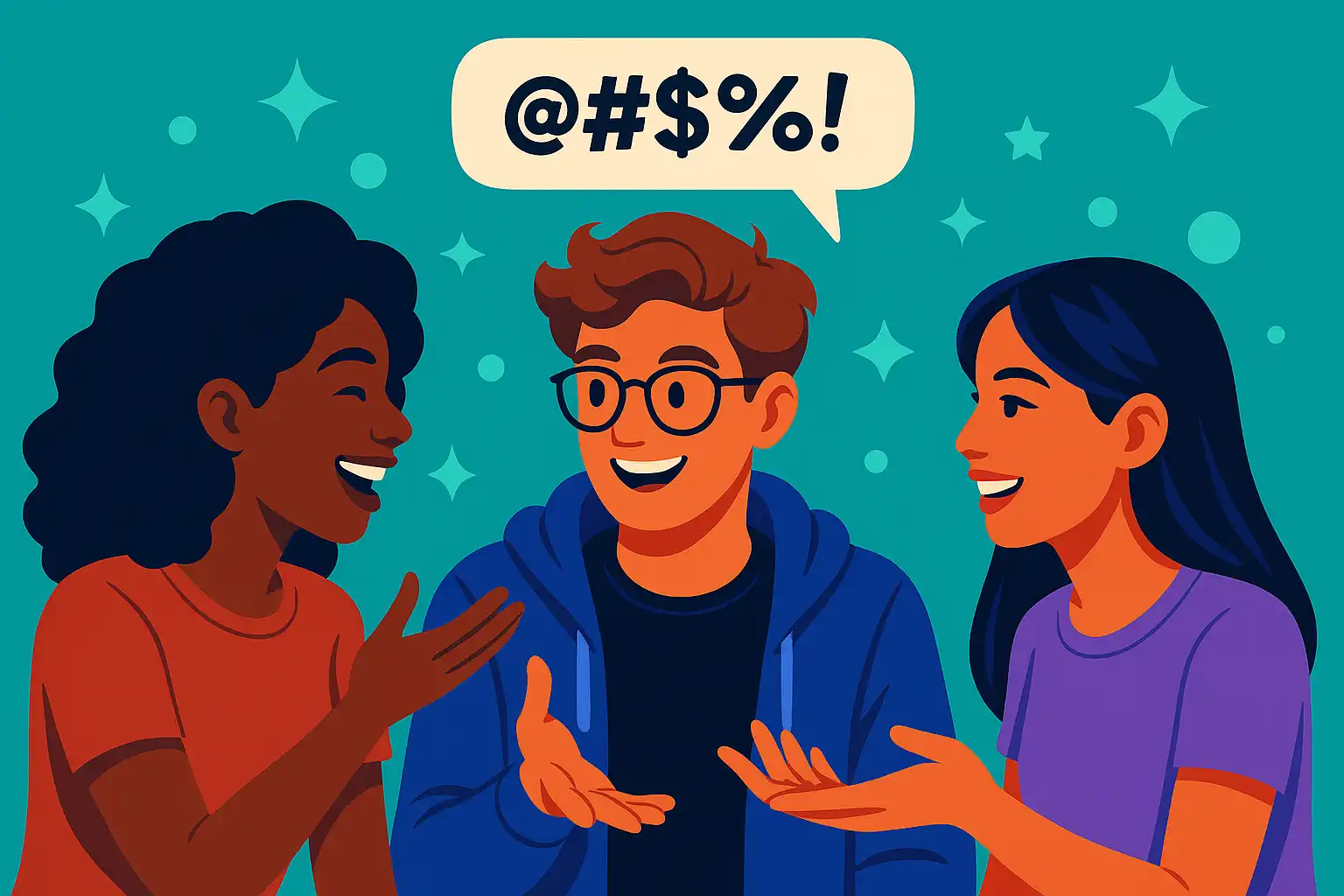
Your teenager just walked in from school, grabbed a snack, and said “This is bussin, no cap” before disappearing into their room to text friends about something being “mid.” If you found yourself nodding along while having no idea what any of that meant, welcome to parenting a Gen Z teen.
Today’s teenagers speak a language that evolves at internet speed, shaped by TikTok trends, gaming culture, and social media in ways previous generations never experienced. Understanding your teen’s slang isn’t about trying to be the “cool parent” who awkwardly drops “fire” into conversations at the dinner table—it’s about maintaining connection, ensuring their safety, and keeping communication lines open during years when teens naturally pull away from parents.
- Why Understanding Teen Slang Actually Matters
- The Positive Vocabulary of Teen Approval
- Reading the Social Landscape
- When Language Reveals Worry
- The Language of Strong Feelings and Boundaries
- Navigating Relationships and Dating
- When to Pay Closer Attention
- How to Actually Talk About This Stuff
- The Real Goal Here
- Frequently Asked Questions
Why Understanding Teen Slang Actually Matters
Your teen’s slang isn’t just random words they picked up online—it’s how they express identity, navigate social hierarchies, and communicate with peers who share their cultural references. When you make an effort to understand their language, you’re showing respect for their world and signaling that you’re interested in their experiences, not just policing their behavior.
Teen slang also provides a window into their emotional state and social life. When you know that “mid” means disappointing or that something “living rent free in their head” suggests persistent worry, you can pick up on emotional cues that might otherwise go unnoticed. Perhaps most importantly, understanding their language helps you stay connected during a developmental stage when teens naturally create distance. When your teenager uses their everyday vocabulary and you actually understand, it removes one more barrier between you.
The Positive Vocabulary of Teen Approval
Let’s start with the good stuff—the terms your teen uses to express enthusiasm and genuine appreciation. Recognizing these helps you understand when your teenager is actually trying to connect with you, even if they’re doing it in unfamiliar language.
Bussin is your teen’s highest food-related compliment. This term specifically describes really good food or drinks—”These cookies you made are bussin” is genuine praise for your baking skills. It originated in AAVE and spread through social media to become Gen Z’s go-to descriptor for delicious food. If your cooking is bussin, you’ve succeeded in a language your teen actually uses with friends, making it more meaningful than a polite “this is good.”
No cap serves as your teen’s truth emphasis marker. When they say “that dinner was amazing, no cap,” they’re emphasizing complete honesty. The term comes from “cap” meaning lie, so “no cap” literally means “no lie.” When your teenager uses this phrase, they want you to know they’re being genuinely truthful—which matters because teens sometimes feel like adults don’t believe them even when they’re being honest.
Fire functions as an all-purpose enthusiastic descriptor. Your playlist is fire, that movie was fire—anything excellent or impressive gets this label. Understanding that it’s high praise helps you recognize when your teen is actually excited about something rather than just offering lukewarm approval.
Bet simply means “yes,” “okay,” or “sounds good.” When you ask “Want to watch a movie tonight?” and they respond “Bet,” they’re agreeing enthusiastically. It’s more affirming than a shrugged “I guess” and shows actual interest in your suggestion.
Reading the Social Landscape
Understanding the terms your teen uses to describe social dynamics gives you insight into how they’re experiencing friendship, peer pressure, and their own place in the teenage ecosystem.
Vibe check describes assessing someone’s mood or the overall atmosphere of a situation. When your teen says they’re “doing a vibe check on this party” before deciding whether to go, they’re evaluating whether the social environment feels right. This phrase actually shows emotional intelligence—they’re consciously assessing situations rather than just impulsively joining whatever’s happening.
Main character energy describes someone who acts confident, self-focused, and in charge of their own narrative. When your teen says they’re “bringing main character energy to the presentation,” they’re psyching themselves up to be confident. It’s generally positive language about self-advocacy and confidence—exactly the kind of attitude you probably want them to have.
Understood the assignment means someone did exactly what was expected and did it perfectly. If your teen says “Mom, you understood the assignment with this birthday party,” they’re telling you that you nailed it. It’s high praise disguised as casual slang—they’re saying you got it exactly right.
When Language Reveals Worry
Some teen slang can indicate underlying stress or anxiety, especially when used frequently in certain contexts. These terms aren’t red flags by themselves, but patterns in usage might be worth noticing.
Living rent free describes something that stays in your mind constantly without you wanting it there. When your teen says an embarrassing moment is “living rent free in their head,” they’re telling you they can’t stop thinking about it. Occasional use is normal, but if your teen frequently talks about negative experiences living rent free, it might indicate rumination or anxiety that could benefit from support.
Mid means mediocre, average, or disappointing. When your teen describes something as mid, they’re expressing disappointment. Context matters enormously—calling a boring movie “mid” is just standard criticism. But if your teenager frequently describes their own efforts or qualities as “mid,” that self-critical pattern might be worth a conversation about self-worth and unrealistic expectations.
The Language of Strong Feelings and Boundaries
Periodt (period with emphasis) functions as a statement-ender meaning “this is final, I’m not arguing about it.” When your teen says “I’m not going to that party, periodt,” they’re drawing a firm boundary. While you might sometimes need to override their decisiveness on safety issues, recognizing when they’re using definitive language helps you understand which issues really matter to them.
NGL (not gonna lie) and ISTG (I swear to God) both serve as honesty markers. Teens use “NGL” before stating opinions or admissions that might be difficult: “NGL, I’m worried about the math test” or “NGL, I don’t think she’s a good friend.” When you hear these phrases, your teen is usually about to share something genuine, making them good opportunities for deeper conversation.
Navigating Relationships and Dating
If your teenager is at the age where dating enters the picture, they’ve got specific vocabulary for discussing social confidence and romantic situations.
Rizz has become Gen Z’s term for charisma and social confidence, particularly in romantic contexts. When your teen says someone “has rizz,” they mean that person is charming and confident in social situations. If they worry about “not having rizz,” they’re expressing insecurity about their social skills. The term is generally lighthearted—it lets teens talk about attraction and confidence in less serious ways.
Glow up describes a positive transformation in appearance, confidence, or overall presence. If your teen talks about “working on their glow up,” they’re engaged in self-improvement—which is generally positive as long as it doesn’t become obsessive or tied to unhealthy body image issues.
The ick describes a sudden feeling of disgust or turn-off that changes how someone views another person romantically. Interestingly, this language actually indicates healthy boundary-setting—they’re recognizing when someone’s behavior doesn’t align with their values. “He gave me the ick when he was rude to the waiter” shows they’re paying attention to how people treat others.
When to Pay Closer Attention
While most teen slang is harmless self-expression, certain patterns might indicate your teenager needs support:
Excessive negative self-talk deserves attention. If your teen frequently describes themselves as “mid,” “cringe,” or uses other consistently negative terms about their abilities, appearance, or social status, it might indicate self-esteem issues worth addressing.
Obsessive language patterns can reveal anxiety. When your teenager repeatedly mentions things “living rent free” in their head—especially negative experiences or social anxieties—they might be struggling with rumination or persistent worry.
Social isolation indicators show up in language too. If your teen frequently talks about not having “rizz,” being “mid” compared to peers, or feeling like everyone else “understands the assignment” except them, they might be struggling socially.
How to Actually Talk About This Stuff
Knowing the vocabulary is only half the battle—you also need to approach conversations in ways that don’t immediately shut your teen down.
Do show genuine curiosity. When you hear an unfamiliar term, asking “I heard you say that was ‘bussin’—does that mean you really liked it?” demonstrates interest without judgment. Most teens actually enjoy explaining their language when they feel like you’re genuinely trying to understand rather than mocking them.
Don’t force it. Once you learn a term, resist the urge to use it constantly. Nothing makes a teen cringe harder than a parent awkwardly inserting “no cap” into every sentence. Use terms naturally and sparingly when they genuinely fit the context.
Do respect their language as valid communication. Even when slang sounds silly to you, remember that it serves important functions—it creates connection with peers, expresses nuanced meanings, and marks their generational identity. Dismissing their language style can feel like dismissing their entire social world.
Don’t police language unless it’s actually problematic. If your teen’s slang isn’t offensive, sexually inappropriate, or cruel, let them express themselves in their own vocabulary.
The Real Goal Here
Your teenager’s slang is a sophisticated communication system that expresses identity, builds community with peers, and navigates social complexity. Understanding their language shows you care about their experiences and want to stay connected as they grow into independence.
The goal isn’t to become fluent in teen slang or to start speaking like a teenager yourself. The goal is to understand enough to maintain open communication, recognize emotional cues in their language, and show respect for their generational culture. When your teen feels understood and respected—even in something as seemingly trivial as their vocabulary choices—they’re more likely to share what’s really going on in their lives.
Language evolves constantly, and what’s current slang today might be outdated by next semester. But the principles of respectful, interested communication remain constant. Focus on understanding your teen’s experiences and feelings rather than mastering every new term. When you create an environment where they feel heard and respected, the specific vocabulary matters less than the connection underneath it.
Frequently Asked Questions
Should I try to use Gen Z slang with my teenager? Use it sparingly and naturally, not constantly. If a term genuinely fits the context and feels natural to you, go ahead—but forcing slang into every conversation will make your teen cringe. Most teens appreciate parents who understand their language but don’t try to perform fluency in it. Understanding is more valuable than usage.
How can I tell if my teen’s slang usage indicates a problem? Pay attention to patterns rather than individual terms. Occasional use of “mid” to describe a movie is normal; frequently calling themselves “mid” might indicate self-esteem issues. Things “living rent free” occasionally is relatable; constant mention of negative experiences living rent free might suggest anxiety worth discussing.
What does it mean when my teen says something is “mid”? “Mid” means mediocre, average, or disappointing—not terrible, but not good either. It suggests something didn’t meet expectations. When teens describe things as mid, they’re expressing disappointment that something should have been better but ended up just average.
Is it okay to ask my teen what their slang means? Absolutely! Most teens appreciate genuine curiosity. Ask in a non-judgmental way: “I heard you say that was ‘bussin’—what does that mean?” This shows interest in their world rather than mockery or criticism. Just don’t interrogate them about every single term—that becomes exhausting.
Why do teens use such extreme language like “I’m deceased”? The hyperbolic language functions as a spectrum of reaction intensity and reflects their comfort with performance as authentic expression. “I’m screaming” means mildly overwhelmed, “I’m deceased” means stronger reaction. The exaggeration has become their standard way of expressing genuine feeling, adapted to stand out in fast-moving social media feeds where mild reactions get lost.
Ready to explore more Gen Z language?